
Practical guide
How to read a chain link fence quote
Wire gauge is the one number on a chain link quote that runs backwards. The smaller the number, the thicker the wire. It is also the number almost nobody checks before comparing two quotes side by side.

Verified 3 August 2026 with the City of Gatineau and the Government of Quebec.
Fences we actually installed
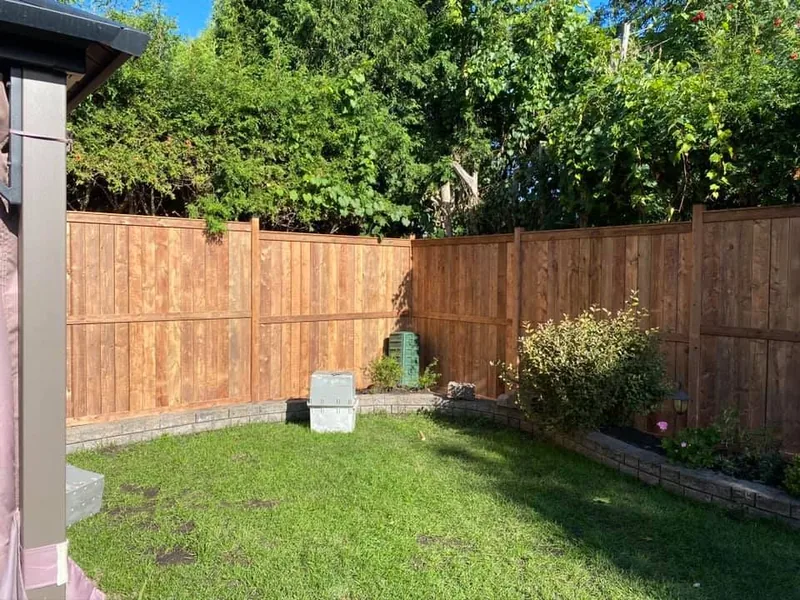
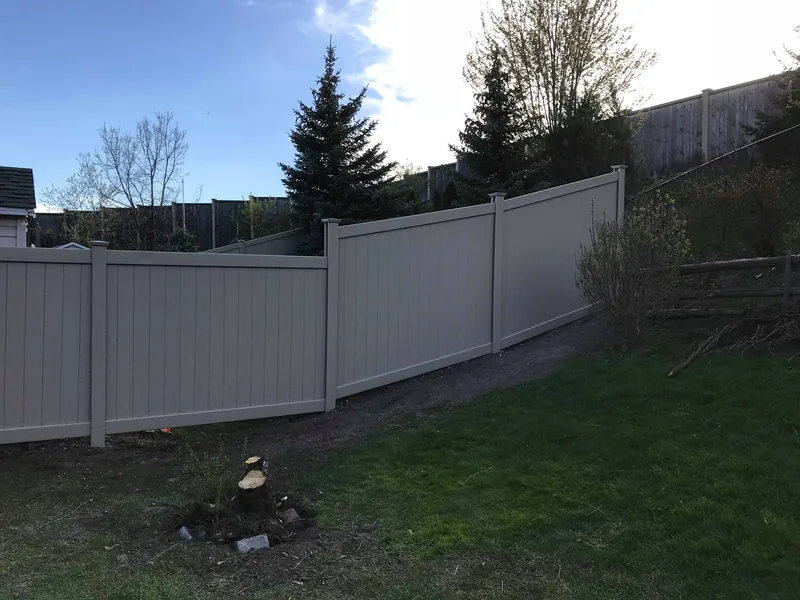
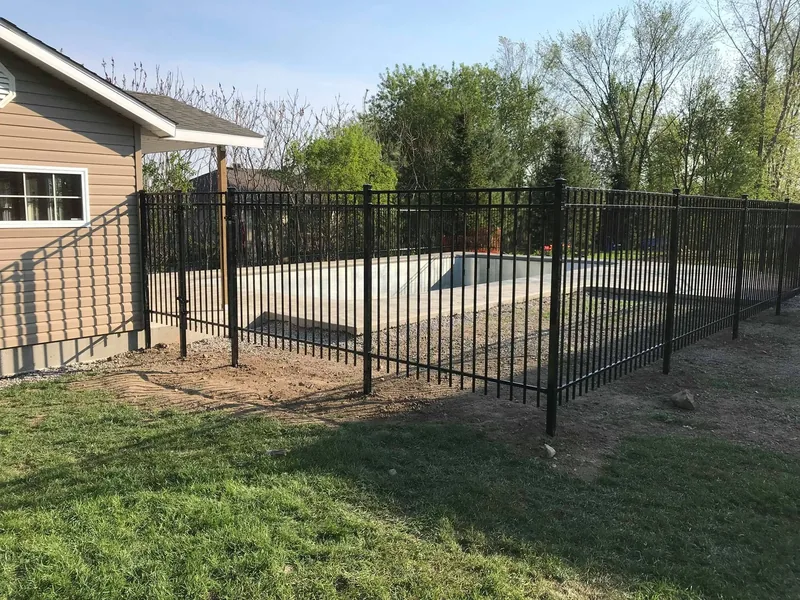
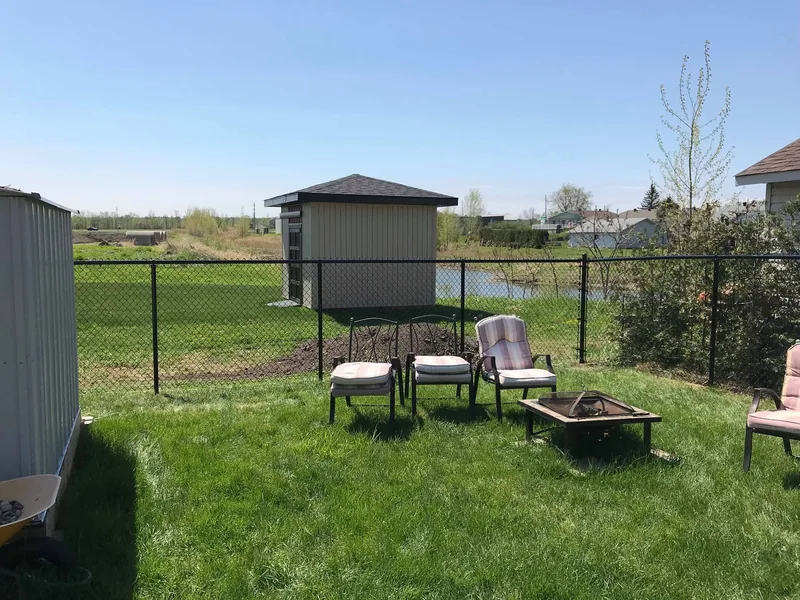
Real job sites in Gatineau and Ottawa. No catalogue photos.
Chain link, frost fence, cyclone fence: same product, three names
In Ottawa most people say chain link. Cross the river and almost everyone says frost fence. Frost is a long established Quebec fence brand, and on that side the name became common enough that people now use it for the product itself. Older Ontario homeowners sometimes say cyclone fence, which came from another brand the same way. All three mean one thing.
That thing is steel wire woven into diamonds, stretched between round steel posts, held at the top by a rail and at each end by a tension bar. It is the oldest fence system still in general use, and it is still the fastest one to put in the ground.
We are not affiliated with any manufacturer and we do not sell a brand. What decides the quality of a chain link fence is not the name printed on the roll, it is what is written on the quote. If you want the service details and what is included instead, the chain link fence page covers that.
Gauge and mesh: the two numbers that decide everything
Gauge is wire thickness, and it runs backwards. The smaller the number, the thicker the wire. A 9 gauge fence is noticeably stronger than an 11.5 gauge fence. It is the first thing to check when two quotes show the same height and the same footage.
| Gauge | Approximate wire thickness | Where it shows up |
|---|---|---|
| 11.5 | about 2.9 mm | Light residential, small yards |
| 11 | about 3.0 mm | The residential standard around here |
| 9 | about 3.8 mm | Commercial, kennels, large dogs, wind exposed lots |
| 6 | about 4.9 mm | Industrial and security. Rare on a house |
Mesh is the size of the diamond. It decides what can pass through the fabric and how stiff that fabric is.
| Diamond opening | What it changes |
|---|---|
| 2 in (about 50 mm) | The residential and commercial standard |
| 1 3/4 in | Tighter and stiffer fabric, harder to push out of shape by hand |
| 1 1/4 in | Kennels, small animals, places where you want to discourage climbing |
| 2 3/8 in | Economy mesh, common on temporary construction fence |
The two numbers compound. Heavier wire and tighter mesh both add steel, which adds weight, which adds load on the posts and the footings. That is why you cannot simply ask for 9 gauge and leave the rest of the quote alone.
Galvanized or black vinyl coated, and how each one ages here
Galvanized is the classic silver finish: steel wire protected by a zinc coating. There are two ways to apply it and the difference shows after a few winters. Galvanized before weaving means the zinc goes on the wire, then the wire is cut and woven, which leaves the cut ends bare. Galvanized after weaving means the fabric is coated once it is already woven, so the zinc covers the cut ends at the top and bottom too. Those cut ends are exactly where white rust starts.
Black is not paint. It is a vinyl jacket over wire that has already been galvanized. There are two methods here as well: vinyl simply extruded around the wire, or vinyl extruded and then bonded to the metal. Bonded vinyl does not peel and does not let water travel underneath it. That is the question to ask when two black chain link quotes do not look alike.
In this region the thing that wears a chain link fence out is not sun, it is salt. The bottom of the fence, on the street and sidewalk side, takes sand and brine all winter. On galvanized you get a white haze first, then rust freckles in the last few inches. On black, the vinyl protects the steel as long as the vinyl is whole. One gouge from a shovel or a snowblower lets water sit between the vinyl and the wire, and that is where it starts.
The visual difference is bigger than most people expect. Galvanized reads as a fence. Black disappears against planting or a hedge to the point that you look straight through it and stop noticing it is there. Both finishes are in our recent projects, on real Ottawa and Gatineau properties.
How to read a chain link quote: posts, rails and fittings
A chain link quote is a parts list. Here is what each term means, so you can compare two documents line by line instead of comparing two totals.
| Term | What it is | Why it matters |
|---|---|---|
| Line post | The intermediate posts between the ends | They carry the fabric, not the tension. Smaller diameter |
| Terminal post (end, corner, gate) | The posts at every end, corner and gate opening | They take the entire pull of the fabric. Always heavier and set deeper |
| Top rail | The horizontal tube running along the top | Holds the line straight and stops the top of the fabric from waving |
| Tension bar | A flat bar woven through the last row of diamonds | Lets the fabric be pulled tight without distorting it |
| Tension band | The clamps that hold the tension bar to the terminal post | The count per post is a real quality tell. Too few and the fabric tears at the end |
| Loop cap (eye top) | The fitting on top of each line post, drilled to pass the top rail | Guides the rail and caps the post |
| Post cap | The solid cap on terminal posts | Keeps water out of the tube so it cannot freeze inside |
| Tension wire | A steel wire run tight along the bottom | Stops the fabric from being lifted from underneath. Essential with a dog |
| Ties | The small wires that tie the fabric to the rail and the posts | Their spacing changes how the fence holds more than most people think |
Two quotes can show the same height and the same gauge and still not describe the same fence. The gap is almost always in the same four places: post diameter, how many terminal posts are counted, how far apart the line posts are set, and how many tension bands go on each end.
Privacy slats and windscreen: what they do to your posts
A chain link fence lets wind through. That is its single best structural quality, and it is exactly what you cancel the moment you add privacy.
Privacy slats are PVC strips pushed vertically into the diamonds. They block a good share of the view, never all of it, and they can be added later to a fence that is already standing. That is where the trap is. A fence built without slats was built to pass air. Fill the diamonds three years later and you have turned it into a sail, on posts and footings that were never sized for it.
Windscreen goes further. It is a near solid fabric tied over the mesh, the kind you see on tennis courts and construction sites. It catches the full wind. It wants larger posts, closer post spacing, usually a bottom rail as well as a top rail, and sometimes bracing at the ends.
There is a side effect nobody mentions until the first winter. A slatted fence stops snow too. The drift builds against the fence instead of blowing through it. Along a driveway that decides where you will be pushing snow for the next twenty years. Tell us where the snow goes when we walk the property. It changes where the line should sit and which slat we recommend.
If slats are even a maybe, say so at the first visit. Setting the right posts up front is far less trouble than replacing them under a finished fence.
Gates, and the hardware that decides everything
On a chain link fence the gate is the only part that moves, so the gate is the part that breaks. Almost every chain link repair we get called out for starts at a gate.
A chain link gate is a steel tube frame put together with corner fittings, with a piece of mesh stretched inside it on its own tension bars. That frame hangs on two hinges bolted to the gate post. The gate post is the hardest working post on the whole fence. It carries the frame as a cantilever, and it takes a shock every time somebody throws the gate instead of pushing it.
- Single gate. One leaf, for walking through. The most reliable, because it has the least cantilever.
- Double gate. Two leaves for vehicle access. One leaf pins to the ground with a drop rod that lands in a sleeve set into the ground. Without that sleeve the rod ends up jammed into frozen dirt beside the hole.
- Rolling gate. It slides along the fence line instead of swinging out. This is the answer when there is no room to swing, or when a swing leaf would be too wide to hang without sagging.
- Hinges and latch. A fork latch is the residential standard. A pool enclosure is different hardware: the hinges have to pull the gate shut on their own and the latch has to lock itself without anyone thinking about it.
The detail that separates a good install from a bad one is clearance. A gate fitted tight in July binds in January, because the ground moves and because ice builds under the leaf. We set the clearance for winter, not for the day of the install.
Residential, commercial, kennel, pool: what changes
The same fence does not get built the same way depending on what it has to hold.
| Use | Typical gauge | Mesh | Common height | The detail that changes |
|---|---|---|---|---|
| Residential back yard | 11 or 11.5 | 2 in | 4, 5 or 6 ft | Bottom tension wire if there is a dog |
| Dog that digs or climbs | 9 | 1 3/4 in | 5 or 6 ft | Tighter mesh and a treated bottom edge |
| Kennel or animal run | 9 | 1 1/4 in | 6 ft | Closer post spacing, often a bottom rail |
| Commercial or storage yard | 9 | 2 in | 6 ft and up | Rolling gate, larger diameter posts |
| Pool enclosure | 11 or 9, same as anywhere | Opening width capped by regulation | Regulated minimum | Permit required, self closing and self latching gate |
Pool is the exception to everything above. A fence enclosing a pool does require a permit, and the rules are not the same on both sides of the river.
On the Gatineau side the enclosure falls under the Quebec Règlement sur la sécurité des piscines résidentielles, and the permit comes from the Ville de Gatineau. The minimum height, the openings, the gate and the compliance deadline are all set out in our Gatineau fence bylaw guide, so we will not repeat them here.
What is specific to chain link is this: the Quebec regulation treats the material separately and caps the width of the mesh openings, with a different requirement depending on whether slats are inserted in the mesh. So do not assume ordinary residential mesh qualifies just because the fence is tall enough. Read the provision at the source, or have us check the enclosure on site before anything is ordered.
On the Ottawa side the City has its own pool enclosure by-law, with its own requirements. Do not carry the Quebec figures across the bridge. Our pool fence page covers the rest, and we confirm what applies at your address before material is ordered.
Frost depth, footings and tension
A chain link fence stands because it is under tension. Anything that lets the tension off makes it look old before its time, and around here the thing that lets the tension off is frost.
Posts get anchored below the frost line. In practice in this region that means holes around four feet deep, with a concrete collar crowned at the top so water runs off instead of sitting against the tube. A post set short lifts at thaw. It lifts a little more every spring, and there is no undoing it. You do not push a heaved post back down, you redo it.
Terminal, corner and gate posts get a wider and deeper hole than line posts, because the full pull of the fabric works on them sideways. That is where the life of the fence is decided. When a chain link fence leans inward at the ends after two or three winters, it is almost always an under set terminal post, not a problem with the mesh.
Line post spacing is the other variable. We do not go past ten feet between residential line posts, and we tighten that up as soon as there are slats, windscreen, a real slope, or a wind exposed corner lot.
Permitted heights, setbacks from the sidewalk and whether a permit is needed are covered in our Gatineau fence bylaw guide. Those are Quebec and City of Gatineau rules. Ontario municipalities set their own, and we confirm yours for your address before anything is ordered.
What fails first, and how long it lasts
The mesh is almost always the last thing to give up. Installed properly, a chain link fence is measured in decades, not years. Here is what wears out before it does, in the order we actually see it.
- The gate. Hinges drop, the leaf sags, the latch stops meeting the catch. This is the number one repair by a wide margin.
- Terminal posts. Lifted by frost or pulled by tension, and they take the line out of the two or three sections beside them.
- The ties. They break one at a time as the fence works. Fabric that has drifted away from the top rail over a few feet is this.
- The bottom of the fabric. Salt, sand, snowblower, string trimmer. It is the first zone to rust on galvanized and the first to get gouged on black.
- The mesh. Last, and often never.
That is the good news about this fence. It is a kit of parts. Fabric can be re-stretched, a single terminal post can be replaced, a gate can be rebuilt, a section clipped by a vehicle can be swapped out, all without touching the rest of the line. That is what we do under fence repair, and it is often the right call on a twenty year old fence where only the gate is finished.
If you are at the stage of comparing quotes, ask for three things in writing: the wire gauge, the terminal post diameter, and the footing depth. Those three lines explain the gap between two documents, and they are the ones that decide whether the fence is still straight in fifteen years. We measure, confirm what the bylaw allows at your address, and put a firm written price in your hands before anyone digs. Call 819-500-4613.
Frequently asked questions
How to read a chain link fence quote
Is a frost fence the same thing as chain link, and what about cyclone fence?
Do I need 9 gauge or 11 gauge?
Can I paint a galvanized fence black?
Can I reuse the posts from an existing chain link fence?
Can a chain link fence be my pool enclosure?
Will a chain link fence hold a dog that digs?
Kevin & his team were very easy to work with and I'm very happy with the result of my new fence. I changed a few things to the original plan and there was no trouble or hassle in doing so. I'm already planning to hire them for another project!
Excellent service from start to finish! The work was completed quickly and with great care. The team is very professional and courteous, and communication was easy throughout the project. I am truly satisfied with the result-I highly recommend them. 5/5
Free quote