
Practical guide
Glass pool fence in Gatineau
The glass is not the hard part. What decides whether a glass pool enclosure passes and whether it survives a winter here is the concrete underneath it and the gate hung on it.

Verified 3 August 2026 with the City of Gatineau and the Government of Quebec.
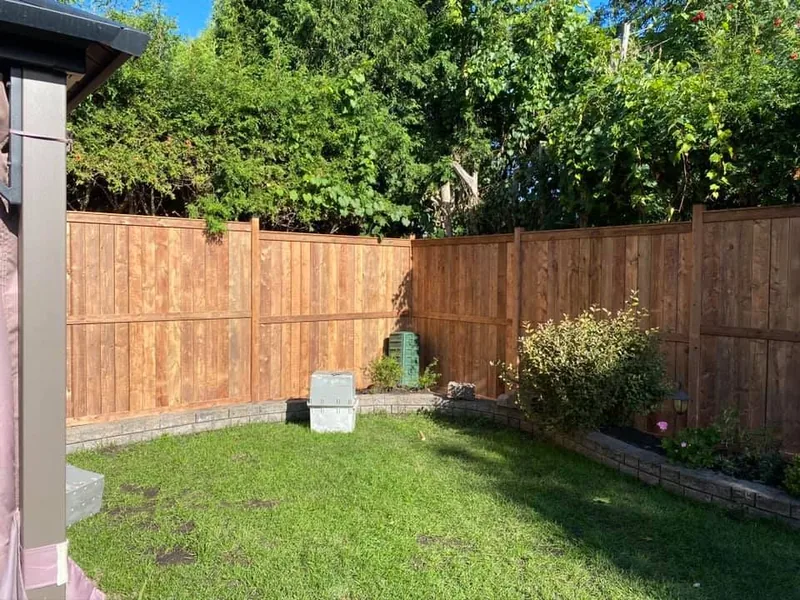
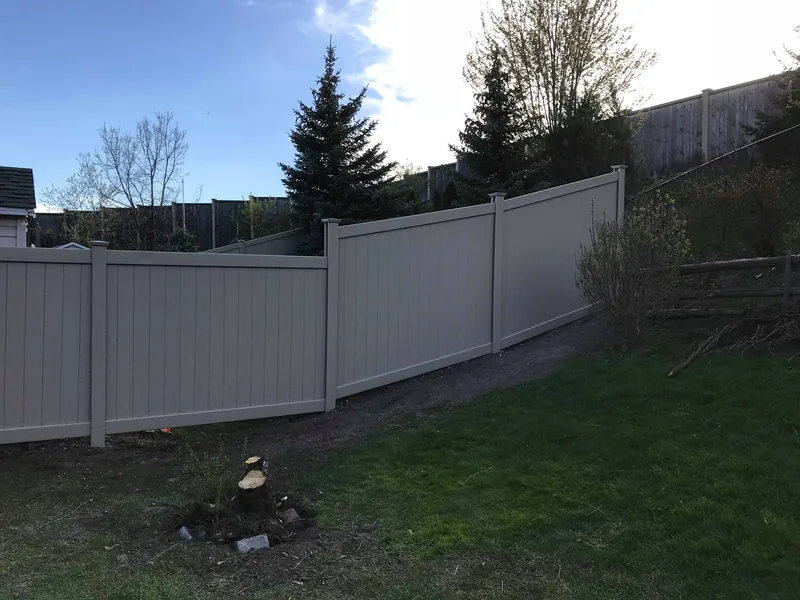
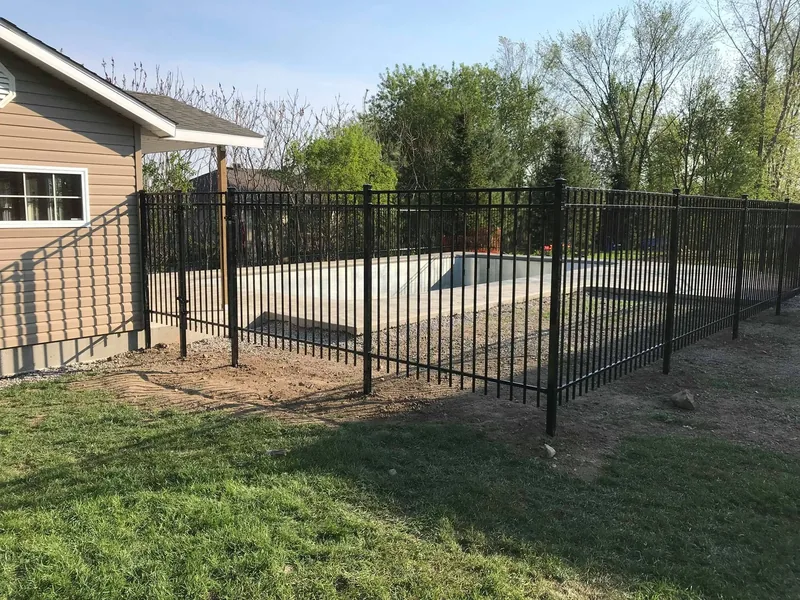
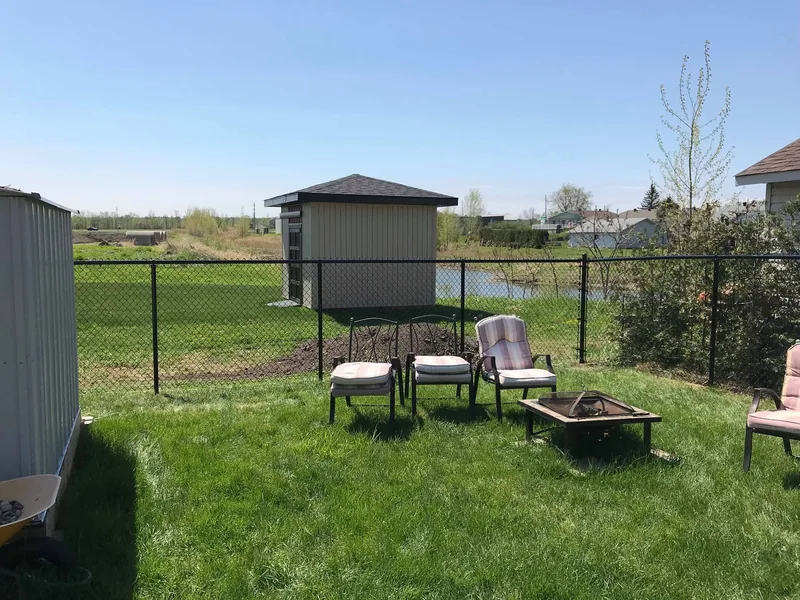
Fences we actually installed
Real job sites in Gatineau and Ottawa. No catalogue photos.
Glass in one minute
A glass pool fence is an enclosure like any other in the eyes of Quebec's pool safety regulation. Glass buys no exemption and changes none of the requirements. What it changes is where the installation is likely to fail.
Most homeowners assume the risk is the glass: that it will crack, chip, or take a soccer ball through it. It almost never does. The two real failure points are the concrete under the spigots and the gate. We rarely see a broken panel. We often see a spigot that has shifted and a gate that no longer latches on its own.
Three things worth knowing before anything else:
- The glass is tempered, not ordinary. If it does break, it crumbles into blunt granules instead of shards.
- The whole enclosure is what gets judged, not the panels. On the Quebec side that means the Règlement sur la sécurité des piscines résidentielles. Material makes no difference to it.
- The ground decides the project. A reinforced slab, a poured curb or footings. The product choice comes after that answer, never before it.
In Gatineau, a fence that protects a pool is the only residential fence that needs a permit. Heights, setbacks and the conformity deadline for pools installed before 1 November 2010 are covered in our Gatineau fence bylaws guide, so this page does not repeat them.
The three kinds of glass fence
"Glass fence" covers three different products. They do not need the same footing, and they do not behave the same way against the nothing-to-climb rule.
| Type | What you see | What holds the panel | What it means for you |
|---|---|---|---|
| Frameless | A run of glass panels with no vertical posts at all | Spigots set in the ground, two or three per panel | The full view. The slab carries everything, so the slab has to be right. |
| Semi-frameless | Panels separated by slim posts | An anchored post at every joint | Forgives ground that frameless would refuse. The posts take part of the load. |
| Framed | Every panel wrapped in a full frame, posts plus top and bottom rails | The frame, the same way an aluminum section works | Easiest to install, least transparent, and the bottom rail needs a second look. |
Why framed glass is rarely the right call around a pool
A low horizontal rail is a step. The regulation prohibits any structural element that lets a child climb the enclosure, and a rail near the ground is the first thing anyone looks at. Frameless glass offers nothing to grab and nothing to stand on. That is its real advantage, and it is a compliance advantage before it is a design one.
Semi-frameless is the honest middle. The posts are slim, they are vertical, they give no foothold, and they let you follow ground that frameless could not.
The glass, the hardware, and why 316 stainless
On a glass fence, everything that is not transparent is hardware, and the hardware is what ages. Beside a pool it lives in chlorine or salt, under splash, and through a winter of road salt. A rusting spigot shows from anywhere in the yard, because there is nothing else to look at.
| Component | What we use | Why |
|---|---|---|
| Glass | Tempered safety glass. In frameless runs, 12 mm panels are the common standard. | Tempered glass crumbles. Ordinary glass produces cutting shards. |
| Edges | Ground and polished on all four sides | A sharp edge starts cracks. Most breakage begins at an edge. |
| Spigots | 316 stainless at minimum. Duplex 2205 beside a salt water pool. | 304 pits and bleeds rust streaks near chlorine and de-icing salt. |
| Anchoring | Core-drilled into concrete, base-plate bolted down, or a continuous channel | Core drilling is the cleanest, a base plate is the easiest to take apart, channel is the stiffest. |
| Gate hinges | Self-closing, hydraulic or spring, adjustable | A glass gate is heavy. An ordinary hinge will not carry it back to the latch. |
| Latch | Self-latching, out of a child's reach | This is a requirement, not a convenience feature. |
Glass thickness, spigot spacing and anchoring method are not taste decisions. They follow from panel height and from the system you buy, and the manufacturer's data sheet settles them. We read it before the concrete is poured, not after.
What the rules require, and where glass passes
The four requirements below come from Quebec's Règlement sur la sécurité des piscines résidentielles. They apply to the enclosure, whatever it is made of.
| Requirement | What it means on the ground | Where glass lands |
|---|---|---|
| 1.2 m: glass clears it easily | Minimum height of 1.2 m measured from the ground, all the way around the pool | A standard panel on spigots clears it. Measure from finished grade, not from the top of the slab. |
| 10 cm: the pressure point for glass | No opening may let a spherical object 10 cm in diameter through | The gap under the panels and between them counts as an opening. |
| Nothing to climb: where frameless wins | No structural element may let a child climb the enclosure | Frameless offers no hold at all. This is where it beats chain link and aluminum outright. |
| Self-closing gate: the same rule for everyone | The gate must close and latch by itself, with nobody helping it | Same requirement as anywhere, harder to hold over time because of the weight. |
The gap under the panels, which everyone forgets
A frameless panel does not touch the ground. The gap is deliberate: it drains, it allows adjustment, and it keeps glass from bearing directly on concrete. It is also an opening, and it gets measured like the rest of the enclosure.
Good practice is not to sit just under the threshold. It is to sit well under it, because ground moves. An enclosure that complies on installation day and does not comply three years later does not comply. Nobody asks how the gap opened up.
Same logic at the ends of a run. A panel that stops a few centimetres short of a house wall or a shed corner leaves a vertical opening that counts exactly like any other. You either finish into the wall or close the return.
For permits, ordinary fence heights and the conformity deadline, see the bylaws guide.
And on the Ottawa side?
This page describes the Quebec regime. A pool on the Ontario side is not covered by the Quebec regulation at all. It falls under the City of Ottawa's own pool enclosure by-law, with its own requirements and its own permit.
We do not publish Ontario figures here, because they are not the same numbers and a height carried across the river is exactly the kind of mistake that gets a finished enclosure taken down. Confirm with the City of Ottawa before you order anything.
What does not change from one side of the river to the other is the mechanics: a continuous enclosure, no opening a small child can get through, nothing to climb, and a gate that closes and latches on its own. The frost, wind and footing problems described below are identical on both sides, because it is the same ground and the same winter.
We install on both sides. We confirm which rules apply at your address before we lay out the enclosure, not after.
The gate, and why glass makes it harder
A tempered glass gate weighs far more than an aluminum gate of the same size. That weight works on the hinges every single time the gate swings. A tired hinge no longer carries the gate all the way to the latch, and the enclosure stops complying without anyone touching anything.
- The gate closes and latches by itself, every time, with no nudge. A manual latch, however good, does not make an enclosure compliant.
- The latching device has to sit out of a child's reach. The regulation is what sets where it goes. We read the article before ordering hardware, because a handle mounted in the wrong place makes the enclosure non-compliant even when everything else is right. Read the regulation.
- We hang the gate to swing outward, away from the pool. That is not a requirement of the regulation, it is common sense: a gate that opens inward can be pushed.
- Self-closing hinges are adjustable, which means they drift. We recheck them in spring, when the pool opens.
- Keep the threshold clear. A stone, a root or a clump of sod is enough to stop the latch from catching.
If you only have one thing checked on an existing enclosure, make it the gate. It is also the most common repair we do on enclosures we did not build, and it is almost always a hinge or a latch, never the panel.
The ground under it, where the real work is
Glass forgives nothing, and not because it is fragile. A chain link fence tolerates a post leaning two degrees and nobody notices. A glass panel leaning two degrees is visible from the far end of the yard, because the top edge of a glass run is a perfect level line and the eye reads it as one.
| What is there now | Verdict | Why |
|---|---|---|
| Sound reinforced concrete slab | Yes | The only substrate core-drilled spigots were designed for. |
| Pavers or slabs on a stone dust or sand bed | No, not as it sits | Nothing resists the overturning load. Pavers work loose, panel by panel. |
| Wood deck | Case by case | The framing has to be reworked and blocked under every spigot. It is not always possible. |
| Bare ground | Yes, with footings or a poured curb | For glass you pour. You do not drive posts. |
| The structure of an above-ground pool | Rarely | The enclosure goes on the ground around the pool, not on the pool. |
Frost
Ground here freezes deep enough to lift a thin slab poured on topsoil. A few millimetres of movement is invisible on a wood fence. On glass it opens a visible gap between two panels, it throws off the top line, and it can load a panel against its spigot. So you either pour below the frost line or pour a slab designed to move as one piece. Never something in between.
Wind
A glass panel is solid. Unlike chain link or aluminum pickets, it does not let wind through. The enclosure becomes a sail, and all of that load travels down through the spigots into the concrete. That is why you cannot borrow an aluminum fence footing and put glass on top of it. It is not the same mechanical problem.
| To settle before pouring | What common systems ask for | What you can ask for |
|---|---|---|
| Slab thickness and reinforcement | A reinforced slab, well beyond an ordinary patio pour | Ask for the spigot data sheet and the slab detail, in writing, before the pour. |
| Anchor depth and setback from the slab edge | A full core drill into the slab, never a surface anchor, and enough concrete in front of the spigot that the edge does not split when it is torqued | The same document. Both numbers come from the spigot manufacturer, not from an installer's habit. |
| Drainage fall | Water leaves the enclosure, it does not run along the spigot line | Ask to see the site levels, taken on your property, before the forms go up. |
A slab already poured too thin cannot be corrected. It gets redone. That is why the first question on a glass project is not the hardware finish, it is what is under your feet.
Winter, cleaning, and what it actually asks of you
Glass is the lowest maintenance fence material structurally and the highest maintenance one visually. Nothing to paint, nothing to stain, nothing to replace on a cycle. In exchange, everything shows.
| Situation | What happens | What to do |
|---|---|---|
| Snowblower | Thrown gravel marks the glass. It is the gravel, never the cold. | Point the chute somewhere else and do not blow along the enclosure. |
| Metal shovel | A shovel edge against a glass edge is the move that breaks a panel. | Plastic shovel, or leave the snow where it is. |
| Road salt | It attacks the hardware, not the glass. | Rinse the spigots and the bottom of the panels in spring. |
| Splash and hard water | White mineral spotting on the glass. | Glass cleaner and a microfibre cloth. Never steel wool, never a metal scraper. |
| Freeze and thaw | Tempered glass handles the temperature swing. A panel pinched with no clearance does not. | Check the setting blocks in the spigots once a year. |
| Annual check | Spigot torque, panel plumb, ground gap, gate. | Spring, at the same time as the pool opening. |
One more thing we would rather say up front. A tempered panel can break spontaneously, years after installation, because of a microscopic inclusion in the glass itself. It is rare, it is well documented in the industry, and it is the reason we install panels of known origin rather than whatever was available. A panel gets replaced, not repaired.
The other yard reality: glass shows the pool, so it shows everything around the pool too. Handprints at kid height stay there until somebody wipes them. That is not a defect, that is the product.
Glass, aluminum or chain link: the honest comparison
For a pool enclosure all three materials comply when they are built properly. They just solve different problems.
| Criterion | Glass | Ornamental aluminum | Chain link |
|---|---|---|---|
| View from the house | Complete | Good, you see between the pickets | Fine, but you see the mesh |
| Nothing to climb | No hold at all | Good, vertical pickets | Poor, mesh is a ladder |
| Footing demand | Highest | Moderate | Lowest |
| Behaviour in wind | Acts as a sail | Lets wind through | Lets wind through |
| Upkeep | None structural, plenty visual | Low | Low |
| After an impact | The panel is replaced | The section is replaced | Often repaired in place |
Where glass is the wrong choice
- A yard with real slope. Glass steps down in stages. Every step creates an offset at the ground, and every offset still has to stay under the 10 cm threshold. On a steep grade that turns into a poured curb to bring the levels back.
- A yard under trees. Sap, pollen, droppings. You will be washing it.
- A run along a cleared driveway. Snowblower, gravel and salt together are the worst environment glass can be put in.
- Big dogs that lean and jump on the fence. The glass holds fine. You just stop seeing through it.
- An enclosure nobody looks at. If the pool is not visible from the house or the deck, glass is paying for transparency that serves no one.
In most yards, ornamental aluminum is still the default for a pool fence, and chain link is still the most direct answer when the view is not the point. Glass earns its place when the view is the whole reason for the project and the ground can support it properly.
How we run a glass project, in Gatineau and in Ottawa
- We measure the property line before we lay out the enclosure. A fence set too close to the sidewalk has to be moved entirely, not adjusted.
- We look at what is under your feet. Existing slab, pavers, wood deck or bare ground: that answer drives the whole project, before anyone picks a product.
- We place the gate first, not last. Swing direction and how people actually walk through the yard set the layout, not the other way around.
- We confirm what applies at your address. The requirements on this page are Quebec's and the Ville de Gatineau's. On the Ontario side the City of Ottawa by-law governs, as covered above. Do not assume the rules transfer across the river.
- You get a firm written price before anything starts. We measure first, we price second.
Clôtures DKA was founded in 2018, holds RBQ licence 5881-5556-01, and won the 2026 Consumer Choice Award as best fence specialist for Gatineau and the surrounding area. You can see real jobs in our projects. For permits, heights and the conformity deadline, everything is in the Gatineau fence bylaws guide. And if your existing enclosure simply has a gate that no longer latches on its own, that is a repair, not a project. Call us at 819-500-4613.
Frequently asked questions
Glass pool fence in Gatineau
Is a glass pool fence compliant in Quebec?
How thick does the glass have to be?
Does glass break in our winters?
Can glass go on an existing paver patio?
Glass or aluminum for a pool enclosure?
Kevin & his team were very easy to work with and I'm very happy with the result of my new fence. I changed a few things to the original plan and there was no trouble or hassle in doing so. I'm already planning to hire them for another project!
Excellent service from start to finish! The work was completed quickly and with great care. The team is very professional and courteous, and communication was easy throughout the project. I am truly satisfied with the result-I highly recommend them. 5/5
Free quote