
Practical guide
Repairing or replacing a fence, how to tell
The boards decide nothing. The posts decide everything. Here is how to find out in fifteen minutes, with a screwdriver, whether your fence can be repaired or is finished.

Verified 3 August 2026 with the City of Gatineau and the Government of Quebec.
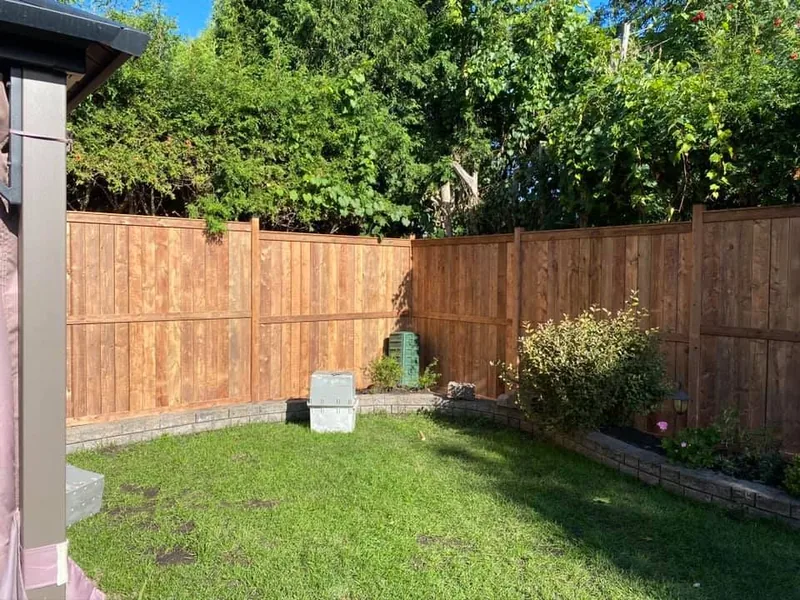
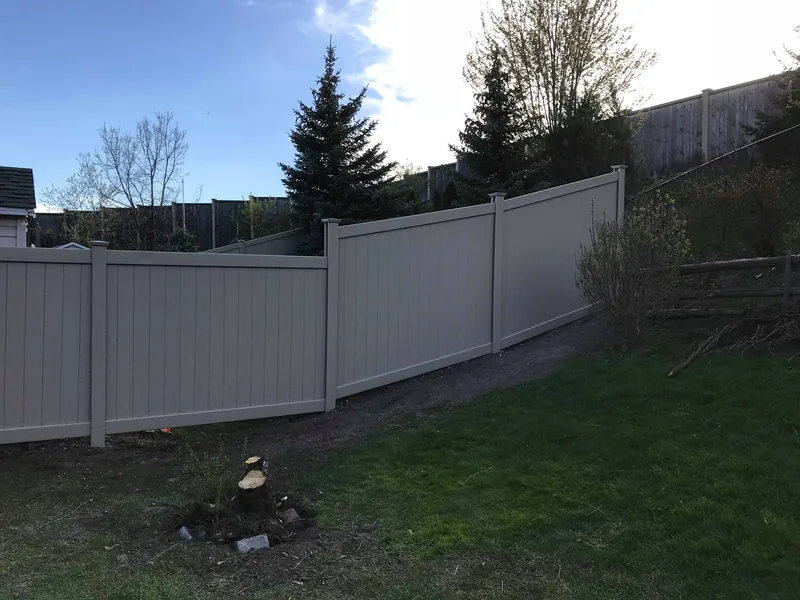
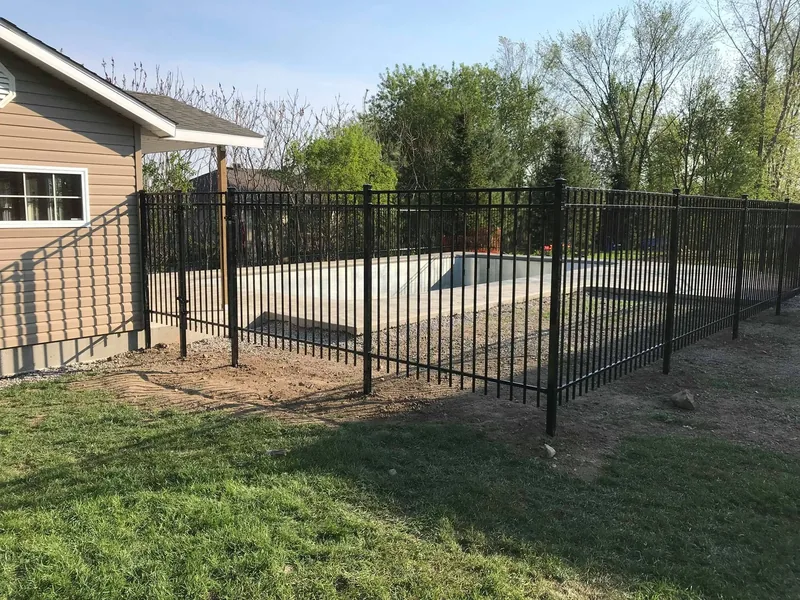
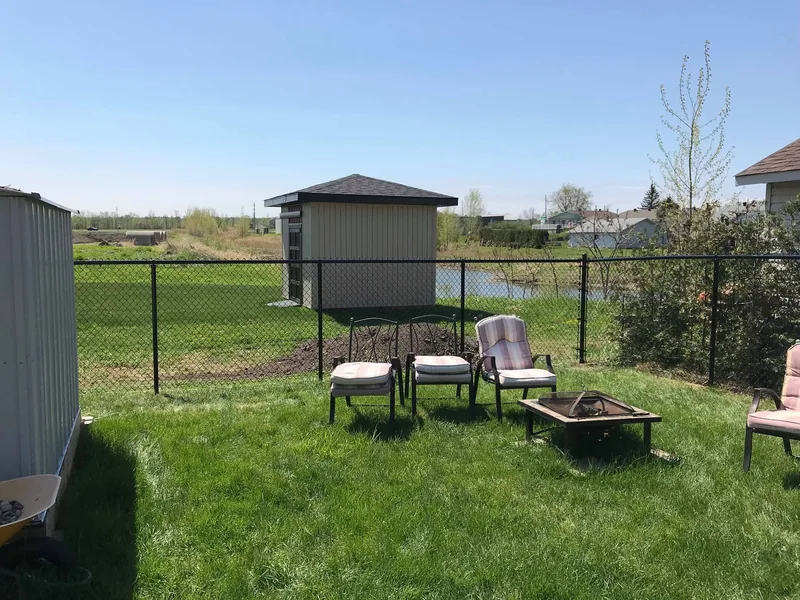
Fences we actually installed
Real job sites in Gatineau and Ottawa. No catalogue photos.
The posts decide, not the boards
Most people judge a fence from the top down. Grey boards, a sagging rail, a gate that drags. That is the wrong end. Look at the ground instead.
A fence is a system of posts. Boards, rails, panels and hardware all come off and go back on one piece at a time, with no digging. Posts do not. Replacing a post means taking apart the sections on both sides, breaking out or pulling the old footing, digging again, pouring, waiting for it to set, and then rebuilding. That is where the work is.
So the question is never whether your fence looks rough. The question is how many posts still hold, and whether they hold straight. A fence with worn boards and sound posts gets repaired without debate. A fence with perfect boards and posts rotted through at ground level is finished, however good it looks in a photo.
That is the first thing we check when we walk a property, before the tape measure comes out. It answers the question in almost every case. Everything after it is working out what the repair or the rebuild actually involves.
The six-point field test
It takes fifteen minutes and a screwdriver. Do it yourself before you call anyone, us included.
| Check | How to do it | What it tells you |
|---|---|---|
| 1. Base of the post | Push a screwdriver tip into the wood right at soil level | If it sinks in without effort, the core of the post is gone. The outside surface can still look fine. |
| 2. How it holds | Grab the post at shoulder height and rock it back and forth | Real movement at the base means the footing has let go, or the wood is eaten away below grade. |
| 3. Relative height | Step back and sight down the top line of the whole run | A post standing higher than its neighbours has been lifted by frost. It will not settle back on its own. |
| 4. Plumb | Put a level on two faces of the post | An even lean along a whole run is a soil or tension problem. One post out of plumb is a post problem. |
| 5. Rails and fasteners | Pull on every rail by hand | Screws spinning in stripped holes are hardware. A rail split at the end is a part to replace. |
| 6. Gate | Swing it wide, let go, watch where it stops | A gate that drags or will not latch is usually telling you about its post, not about itself. |
Count the posts that fail checks 1, 2 or 3. That number is your answer. Everything else on the list is parts, and parts get changed.
What our winters do to a footing
Frost does not push a fence over in one season. It lifts it one notch a winter, and it never puts it back.
The mechanism is straightforward. Water held in the soil freezes and expands. In the clay soils on both sides of the river, which hold a lot of water, the ice grips the sides of the post and lifts it. While the base is off its seat, soil and gravel fall into the gap that has just opened underneath. During the thaw the post drops back down, but not all the way, because the space is now occupied. The next winter starts one notch higher.
Two things decide whether your fence escapes this.
- Footing depth. A footing that stops above the frost line will be lifted, every time. The exact depth is not something to guess at: it comes from the applicable building code and the municipality, and we confirm it for your address before digging.
- Drainage. A hole filled with concrete from the bottom right up to the grass, with no clear stone bed underneath, traps water against the post and keeps the base sitting in saturated soil all through the fall. That is the exact recipe for heave.
The consequence is blunt. If the original posts were set too shallow, no repair fixes the problem. We can straighten a heaved post and reset it plumb, and it will come back up the following winter. It is the one case where we turn down a repair a customer has asked for, because we already know we would be doing it again.
The decision table, repairable or finished
This is the table we work from on site. It is written for wood, and the same logic carries over to vinyl, aluminum and chain link.
| What you see | Verdict | What we do |
|---|---|---|
| Grey or faded boards, structure solid | Repairable | Nothing structural. Clean and stain if you want to, or let it grey out. |
| One or a few split or broken boards | Repairable | Swap the affected boards without taking the section apart. |
| Sagging rail between two sound posts | Repairable | New rail, and the fastenings redone at both ends. |
| Gate dragging on the ground | Repairable in most cases | Check the gate post first, then the hinges and whether the frame is still square. |
| One post moving, the rest solid | Repairable | Redo that post and its footing, set below the frost line. |
| Wood soft to a screwdriver at grade | That post is finished | The post gets replaced. What happens next depends on the total count. |
| Several posts standing above the top line | Usually finished | Frost heave, almost always from shallow footings. A repair will not hold. |
| A whole run leaning the same way | Finished | The soil or the footings gave way along the length. Straightening means dismantling everything. |
| Loose chain link fabric, posts straight | Repairable | Retension the fabric and redo the ties and the tension wire. |
| Chain link post rusted through at grade | That post is finished | The tube is perforated at the base. It gets replaced, welding to it achieves nothing. |
The working threshold is this. Once more than about a third of the posts move, go soft at the base, or have heaved, we stop repairing. At that point every post we redo forces us to dismantle the neighbouring sections, which are the same age, and the fence will be asking for another visit every spring.
One section, or the whole fence
Redoing part of a fence is always technically possible. What decides it is not feasibility, it is whether the new work will match.
| Material | Partial replacement | The catch |
|---|---|---|
| Pressure-treated wood | Easy | Colour. A new board stays pale for a year or two before it catches up to the rest. |
| Cedar | Easy | Same issue, more obvious, because cedar greys out very evenly. |
| PVC and vinyl | Possible | Profile and shade. Product lines are discontinued regularly. If yours is no longer made, the new section will not match. |
| Chain link | The most forgiving of the six | Almost nothing. Fabric is cut, spliced and retensioned, and a single post is changed on its own. |
| Ornamental aluminum | Possible | Finish shade and picket spacing vary between manufacturers. |
| Composite | Possible | Production batch. Two batches never come out exactly the same shade. |
Chain link is the most tolerant material on that list, because none of its parts has to match anything visually. That is why a chain link fence can be patched almost indefinitely as long as the posts hold.
As a rule of thumb, once the portion needing work passes roughly a third of the total length, replacing the whole thing becomes the sensible call. A good share of the job is mobilization, excavation and hauling, and that share happens once. Otherwise you end up with two fences of different ages on one property, and the older one will remind you of its age within two or three winters. There are examples of both approaches in our recent projects.
When repair is the right call, and when it is money thrown away
A contractor who always tells you to replace is selling a fence, not answering your question. The table above settles most cases. Three situations no table covers are left, because they do not depend on the condition of the fence alone.
- Worn hardware. Hinges, latches, screws that no longer bite, a gate spring. That is maintenance, not the end of a fence, and it is sorted in one visit.
- Localized damage on a young fence. A car backed into it, a branch came down, wind took out a section. If the posts elsewhere pass the test, we rebuild the affected area and stop there.
- A fence you are going to replace anyway in two or three years. If a yard redesign, a pool or a sale is coming, a targeted repair carries you through the gap without paying twice for the final version. It is the one case where we repair a fence we know is on its way out, and we say so in those words.
In all three, fence repair is the right call, and we say so even when a full replacement would pay us better.
On the other side, only one thing makes a repair pointless, and it is always the same one: the posts no longer carry the fence. Repairing a fence whose posts have already gone means paying twice and waiting in between. We would rather say so up front, even if that means not selling anything that day.
One case sits outside all of this. A pool enclosure that does not comply is never fixed by a partial repair. That is the section below.
Shared fences, and what changes
A fence sitting exactly on the property line is not yours alone. On the Quebec side, the Civil Code of Quebec (French text) presumes a fence on the line is common property, which makes repairing, replacing or removing it a two-owner decision. On the Ontario side the Civil Code does not apply at all, and fences between neighbours are governed by separate provincial and municipal rules with their own process. Which set applies depends entirely on which side of the river you are on, and it catches people out.
Three things to do before touching a shared fence.
- Pull out your survey. The survey says where the line runs, not the fence, which may well have been set crooked twenty years ago.
- Talk to the neighbour before the work starts and put the agreement in writing, even three lines by email. Cost sharing gets settled there, not afterwards.
- If no agreement is possible, a fence built entirely on your own land is still an option. It belongs to you, you decide when it gets maintained, and you do not have to ask anyone.
One nuance settles a lot of arguments. A fence that looks like it is on the line often is not. We measure first, because a fence everyone assumed was shared frequently turns out to sit entirely on one property, and the conversation changes completely.
If your property is in Ottawa, tell us before we quote. We check the rules that apply at your address rather than carrying the Quebec ones across the river.
If the fence encloses a pool, the rules change
A pool enclosure does not get repaired like an ordinary fence. It is the most common trap in this whole guide, and an expensive one, because it usually surfaces after the work is done.
Minimum height, openings, the type of gate, the permit and the compliance deadline are all set out, with their official sources and the date they were verified, in our Gatineau fence by-law guide. The requirements come from Quebec's Residential Pool Safety Regulation (CQLR, c. S-3.1.02, r. 1) and from the City of Gatineau. Always check at the source.
Here is what it changes for a repair: an enclosure either complies or it does not. There is no partial compliance. A rebuilt section that leaves a gap at ground level, a new brace that gives a foothold, a manual latch fitted in place of an automatic mechanism: each one of those voids compliance for the entire enclosure, even if nothing else moved.
That is why we treat this work as a full pool fence job, not an ordinary repair. A repair that touches an enclosure gets checked with the City before the work starts, because a pool enclosure is regulated separately from an ordinary fence.
If your pool is on the Ontario side, none of the above applies to you. The requirements come from Ontario and your municipality instead, and we confirm what applies at your address before starting.
The spring inspection, and what happens next
Wait until the ground has fully thawed. In April a good part of what you are looking at is still going to settle, and you would be judging a fence that is not in its real condition. Late May is a good time here.
- Walk the full perimeter, outside first and then inside. You see things from one side that do not show from the other.
- Run the six-point test again, post by post, and write down the failures on paper.
- Clear the base of every post. Soil, mulch and grass piled against the wood hold moisture in exactly the place you do not want it.
- Cut back anything growing into the fence. A vine lifts rails and spreads pickets, slowly and reliably.
- Work every gate ten times or so. Hardware faults show up through repetition, not on the first swing.
- Retighten loose screws and ties right away. Twenty minutes in the spring, or a split rail in the fall.
After that, if the post count worries you, we will come and look. We measure the real length, test every post, check how deep the existing footings go, and you get a written quote covering both options, repair and replacement, with what each one fixes and what it does not. The price is firm and it is in writing before any work starts. We have been installing in Gatineau, Ottawa and the Outaouais since 2018, and the phone number is 819 500-4613. If you want to check allowed heights and setbacks at your address first, our Gatineau fence by-law guide lays them out.
Frequently asked questions
Repairing or replacing a fence, how to tell
How do I test my fence posts myself?
Will a frost-heaved post settle back on its own?
Does grey wood mean the fence is rotten?
Which materials match best when only part of the fence is replaced?
Can a repair make my pool enclosure non-compliant?
My neighbour will not pay for the fence we share. What now?
Why does the price depend on the posts and not the length?
Kevin & his team were very easy to work with and I'm very happy with the result of my new fence. I changed a few things to the original plan and there was no trouble or hassle in doing so. I'm already planning to hire them for another project!
Excellent service from start to finish! The work was completed quickly and with great care. The team is very professional and courteous, and communication was easy throughout the project. I am truly satisfied with the result-I highly recommend them. 5/5
Free quote